12 lessons from 12 months in the UK
One year of SpacetoCo, live and growing with UK hosts and hirers 🇬🇧 Twelve months ago, we launched in the UK not knowing exactly how the market .
.svg)
If your community venue has spare capacity, hosting other groups in that space can bring in income and new relationships with your community. But a listing on its own doesn't make a good host. What happens before, during and after a booking determines whether a guest becomes a regular or never books again.
This guide covers the practical habits that make space sharing work well for a community venue, from first contact through to closing the loop after a booking.
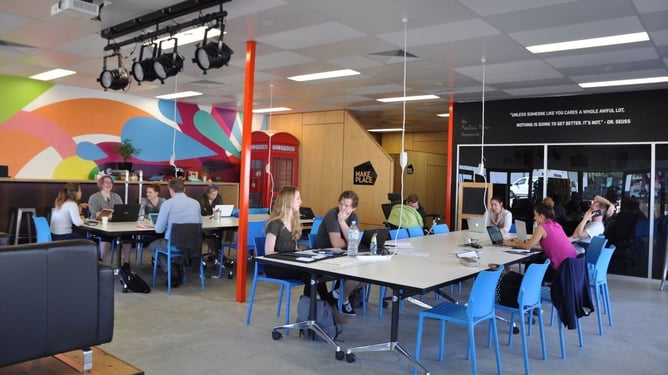
Hosting a shared space well means giving guests a clear, respectful and low-friction experience from the first enquiry to the final walkout. A well-run listing with a poor hosting experience behind it leads to bad reviews and lost repeat bookings, while a modest space that's hosted attentively builds a loyal base of return guests.
Community venues often assume the work stops once a booking is confirmed. In practice, the handover, the communication during the booking, and the follow-up afterward matter as much as the space itself. Guests remember how they were treated more than they remember the room.
The first interaction sets the tone for everything that follows. A guest who gets a real response from a real person, rather than an automated confirmation and silence, is more likely to trust the venue and return.
Before confirming a booking, a good host:
Most negative reviews for shared spaces come down to a mismatch between what was expected and what was delivered. Clear, upfront communication removes most of that risk before it happens, and thinking through the full customer journey a guest goes through before booking helps identify where that mismatch tends to happen.
Once a booking is underway, the goal shifts from setting expectations to being available without being intrusive. Guests should feel able to reach the host if something goes wrong, without feeling watched throughout their booking.
During the booking, this means:
After the booking, a short follow-up asking what worked and what didn't gives the host useful information and signals to the guest that their experience mattered. Venues that ask for feedback consistently tend to build a base of repeat bookers faster than those that don't, because guests know their input is used.
For councils and community venues juggling repeat bookings across multiple spaces, a central booking system that keeps enquiries, confirmations and messages in one place removes a lot of the manual tracking that otherwise falls on staff. SpacetoCo's community venue booking platform is built for exactly this: managing availability, payments and guest communication without adding admin load to a small team.
The venues that get the most value from space sharing over time are the ones that treat hosting as an ongoing relationship rather than a series of one-off transactions. A guest who has a smooth first booking, and knows the venue will respond if something comes up, is far more likely to book again and to recommend the space to others in their network.
This compounding effect is where the real return on space sharing shows up. A single booking covers a few hours of unused capacity. A returning guest, or a guest who refers others, extends that value well beyond the original booking. SpacetoCo's Regular Hirer Bingo Quiz is a quick, informal way to check how well a venue's current setup actually supports repeat hirers.
What's the first thing to get right as a space sharing host?
Personal, timely communication at the enquiry stage. A real response from a real person, even briefly, sets a tone of trust that automated confirmations alone can't match, and reduces the chance of a mismatch in expectations later.
How much should a host check in during a booking?
Enough to be reachable if something goes wrong, without interrupting the guest unnecessarily. Most guests want independence during their booking and only need to contact the host if an issue comes up, such as an access problem or an equipment question.
Does asking for feedback actually help bookings long-term?
Yes. Venues that consistently ask guests what worked and what didn't tend to build a base of repeat bookers faster, because the feedback loop signals that guest experience is taken seriously and gives the venue specific things to improve.
Hosting a shared community space well comes down to a small set of consistent habits: responding promptly, setting clear expectations upfront, staying reachable without hovering, and closing the loop with feedback after the booking. These space sharing host tips apply whether the venue is hosting its first booking or its five-hundredth, and they're what separates a listing that gets booked once from one that builds a genuine base of returning guests.
Download SpacetoCo's guide to increasing usage and bookings at your community facility!
.svg)
Book a personalised demo with a local team member




© 2026 SpacetoCo PTY LTD | All Rights Reserved | hello@spacetoco.com | AU: (08) 6102 1191 | UK: 0330 818 2437 | NZ: (09) 887 4698
©️ 2025 SpacetoCo PTY LTD | All Rights Reserved |
AU: (08) 6102 1191 | NZ: (09) 887 4698