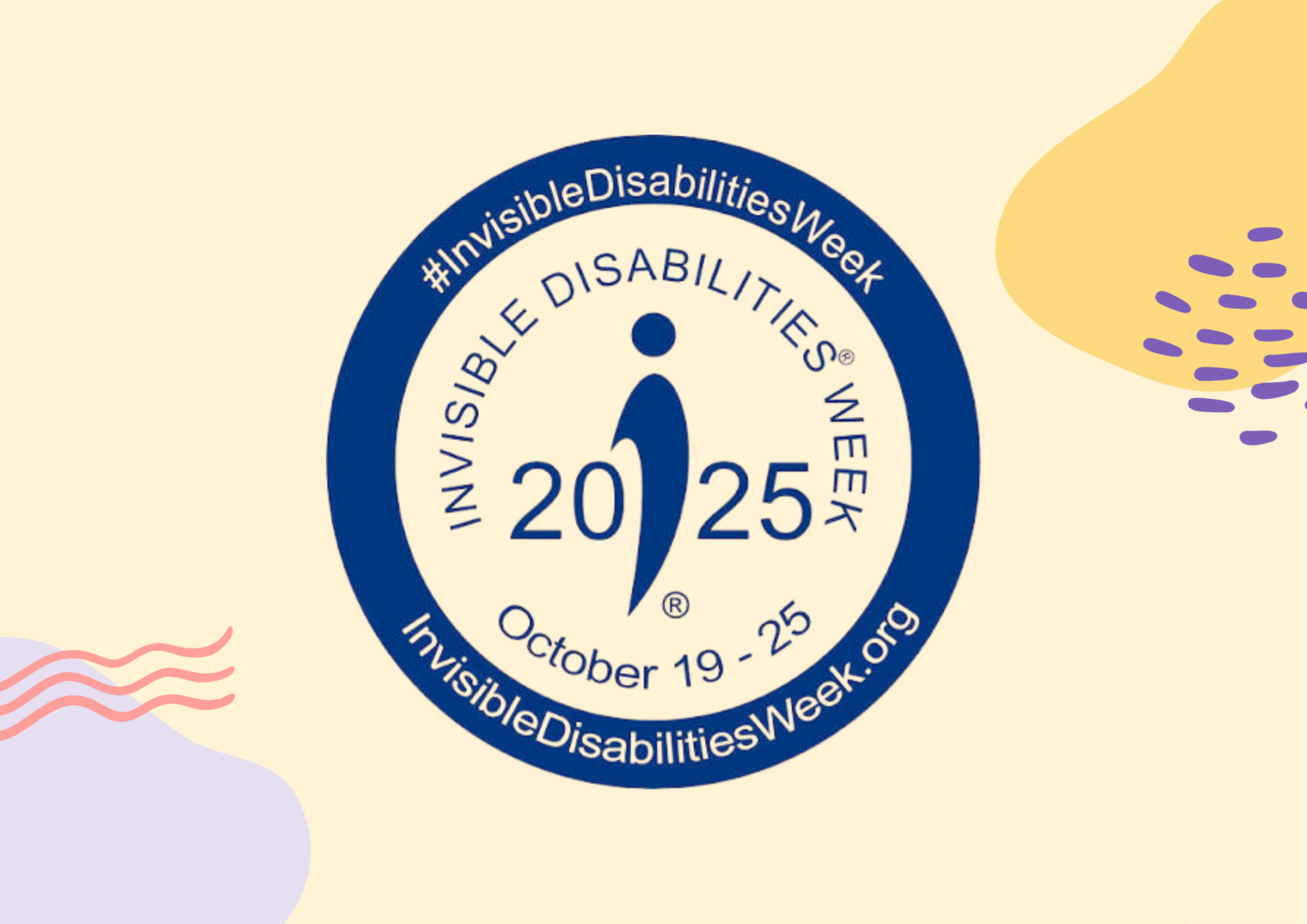
This October (18–24), it's Invisible Disabilities Week. It’s a timely reminder that most disabilities aren't immediately obvious, and an opportunity to start conversations about inclusion.
When people with disabilities are included — truly included, not just accommodated — our workplaces, our communities, and our systems work better for everyone. Not despite our differences. Because of them.
People living with disabilities are an important, sizeable portion of our communities
If we look at the countries where SpacetoCo operates alone:
But disabilities do not discriminate against race, colour or creed. There are people living with disability in your office, on your team, in your client base. It may be visible. It may not be. But the absence of obvious markers doesn't mean the absence of need.
For too long, disability has been framed as a deficit to overcome. Invisible Disability Week encourages people to flip that script and to be mindful in their dealings with others, because the world is better when we are more accommodating and kinder to our peers, allowing everyone to fully participate.
What inclusion looks like in my house
My eldest son, George, is eleven. He has Level 3 autism and is non-speaking. He sees the world differently than I do — more literally, more vividly, with less patience for pretence. If a process is inefficient, George will find the shortcut. If communication is unclear, he'll let you know, even without words.
George teaches me every day that "different" is not "less." But the world isn't always built for brains like his. He has to work harder to be understood. He has to navigate systems designed by and for neurotypical people. The barriers aren't in his body. They're in our structures.
When I think about inclusion, I think about George. I think about what he could contribute to a classroom, a workplace, a community, if that community were genuinely accessible. Not just physically, but communicatively, socially, and structurally.
Community is where the story gets owned
Something a colleague raised while we were putting this piece together has stuck with me: people from any marginalised group, including disabled people, and especially those who weren't born with their disability, are better able to own their story when they're surrounded by community.
Spaces facilitate that, one way or another. But the effect isn't equal. It has a disproportionate impact on people who are already on the fringes, because for them, a space that genuinely includes them isn't a nice-to-have. It's often the first place they get to be understood on their own terms.
That's a different idea from accommodation. Accommodation asks, "how do we make room for you?" Community asks, "how do we help you find your voice among people who get it?" Both matter. Only one of them is talked about enough.
The stories we haven't told yet
The most convincing evidence for any of this isn't a statistic. It's a story. Real examples of community venues adapting their facilities or processes, and guests finding a space that finally worked for them, would say more than anything we could write from the outside.
We don't have those stories collected yet, and we'd rather say that plainly than pad this piece out with anecdotes that aren't ours to tell. So consider this an open invitation: if you're a SpacetoCo host who's changed something about your space or process to make it more inclusive for people living with disabilities, or you’ve made it work better for a guest, or a guest who's found a venue that got it right, we'd like to hear it. Not to use it as a quick marketing moment, but because it's the kind of proof that this theme means something beyond October.
From awareness to action
Awareness is a starting point, not a destination. Celebrating disability and nurturing inclusion is about more than ribbons and social media tiles. It's about:
- Accessible communication. Offering information in multiple formats. Being explicit instead of assuming context. Writing clearly.
- Flexible structures. Recognising that productivity doesn't always look like a desk between nine and five. Some of the best problem-solvers need different environments to thrive.
- Nothing about us without us. Including people with disability in decisions that affect them. Not as tokens, but as experts in their own experience.
If we get this right, we don't just help people with disabilities. We help parents juggling therapies and careers. We help colleagues who are burnt out by rigid systems. We help clients who've been locked out of services by complexity and jargon.
A challenge for Invisible Disability Week, and beyond
If Invisible Disability Week leaves you wondering what to actually do, start here:
Look at one process, one communication, one space this week and ask, who is this built for, and who is it excluding?
The answer might surprise you. Fixing it might be simpler than you think.
The world works better with us. With George. With your colleague who processes information differently. With the client who navigates your website using a screen reader. With the employee whose energy fades in open-plan offices but ignites in quiet focus.
Not later. Not when they've learned to fit in. Now. As they are.
That's this month's promise. And if we mean it, it's the promise of every month that follows.
Frequently asked questions