


12 lessons from 12 months in the UK
One year of SpacetoCo, live and growing with UK hosts and hirers 🇬🇧 Twelve months ago, we launched in the UK not knowing exactly how the market .
.svg)
Many community organisations rely on amazing volunteers to make their vision happen. These passionate, dedicated people are valuable assets on the ground, and the hands of the mission. But recruiting and retaining volunteers is a genuine challenge, because you're dealing with people who all have different motivations and needs, and that challenge keeps shifting as remote work, funding pressures and role changes reshape what volunteering looks like today.
If you're someone working at a community venue that relies on volunteers, or a council looking to share resources with volunteer-based groups, this guide to recruiting and retaining volunteers is for you. If you're also managing a volunteer committee specifically, our guide on how to attract, engage and retain committee members, covers ground this post doesn't.
Recruiting and retaining volunteers gets easier once you recognise the strengths your organisation already has to work with: a clear mission, loyal existing volunteers, and people's genuine need for connection. These are your first port of call, so lean on them.
You're not starting from scratch.
Your mission. Remember why your organisation exists and who your community is. Why is your centre, club or group needed? Lean into your mission when the going gets tough, and communicate it well with potential and current volunteers alike.
Your current volunteers. They're amazing. These fiercely loyal people see their role as a calling, not a job, and they're willing to offer their time and talent to be of service. They're the best spokespeople for your volunteer efforts, and also your richest source of feedback. Ask them what it actually takes to recruit and retain new people.
People's need for connection. Isolation and disconnection have made one thing more apparent than ever: people need meaningful connection. This is a major motivation for younger volunteers now and into the future, and as a community organisation, you already have a wealth of knowledge and experience here. It's the same instinct behind good community engagement and activation more broadly.

Recruiting volunteers starts with a strong organisational foundation, clear role descriptions, and reaching new volunteers where they already are, from job boards to social media.
 Get your organisational foundation right first.
It all starts with you and your organisation. If your vision, mission and lived-out culture are strong, people gravitate towards your cause no matter what crisis hits it. A few things worth doing:
Review your vision, mission and values as an organisation, and involve your current volunteers in the process. They'll bring valuable ground-level knowledge you won't get anywhere else.
Write your vision, mission and values as succinct, memorable statements. Consider placing your mission statement around your community space or in email footers.
Check whether your values are actually being lived out, especially around volunteers. Do paid staff know volunteers are seen as important to the organisation's overall vision? Ask your volunteers directly about their experience and how the culture could improve.
Get clarity on roles.
Review your volunteer roles and needs on a regular basis. Some roles may need to pause for a while, others may need tweaking. Clarity matters more than most organisations give it credit for.
Review existing role descriptions and keep them current. They should outline the skills expected, what people can expect to actually do, and how much decision-making authority the role carries.
Make sure volunteers have the right equipment to do their job well, including for remote work, and think through what training they'll need for any new tech platforms.
Explore funding opportunities so volunteers get adequate support and supervision. Without this, your volunteer program isn't sustainable long-term.
Reach new volunteers where they are.
More young people are putting their hands up to volunteer, which means it pays to find new ways of reaching this demographic:
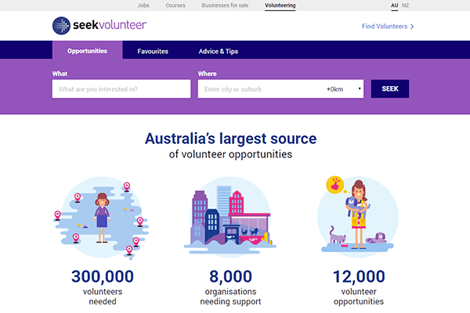
Advertise roles online through platforms like SEEK Volunteer, Do Good Jobs, or Go Volunteer.
Create tech-focused volunteer roles, such as managing social media, email newsletters, or event posters.
Offer roles with genuine upskilling opportunities that look good on a CV.
Communicate your mission and why it matters. Socially conscious volunteers want proof they're making a difference, ideally through modern formats like video.
Build in opportunities for volunteers to connect directly with staff and the people you serve. Nothing beats this kind of connection, especially for younger volunteers.
Retaining volunteers comes down to two things: keeping them genuinely in the loop, and actively looking after their wellbeing.
 Communication and engagement
Include volunteers in staff communications so they feel part of the wider team, not separate from it.
Ask volunteers whether they're getting enough information to do their jobs well, and act on what they tell you.
Be clear about lines of communication. Who do volunteers report to? Who do they ask for help, especially when working remotely with unfamiliar tech?
Wellbeing of volunteers
Encourage volunteers to look after their own wellbeing and mental health, and check in on them regularly as part of your organisational meetings.
Support volunteers who need to step back or take a break because of personal struggles.
Whether it's a natural disaster, an illness outbreak, or a funding shortfall, having a plan for keeping volunteers safe, informed and engaged through disruption is what keeps your program resilient long-term.
 Safety
Keep up to date with guidance from your local health or emergency authority, and share it promptly with volunteers.
Follow current workplace health and hygiene guidance appropriate to the situation, whether that's an illness outbreak, extreme weather, or another local emergency.
Use clear posters and signage to communicate safety measures at your venue, including where to find handwashing or first-aid stations.
Make sure unwell staff and volunteers stay home, and limit exposure risk for vulnerable volunteers by offering remote roles or reduced travel where possible.
Hold virtual meetings where you can, and support volunteers working remotely with the equipment and guidance they need to do it safely.
Wellbeing during disruption
If roles need to pause, keep communicating with those volunteers. Ask if they want to stay in the loop about what's happening and when the role is expected to resume.
Find ways to keep volunteers socially connected, even if it's just an online meetup, a Facebook group, or a phone call.
Capacity
If volunteers have less to do during a disruption but still want to stay involved, point them toward online training such as webinars, free courses, or reading.
Make sure the community you serve understands the extent to which your volunteers can help at reduced hours, capacity, or remotely.
 Future planning
Plan ahead for how people could volunteer through future disruptions, including whether roles could be enacted remotely.
Think about how volunteers recover long-term after a disruption, and whether funds need reallocating toward more wellbeing support.
Together, this is what turns volunteer management from something reactive into something your organisation can rely on year-round. It sits alongside the other side of the coin too, managing your staff and volunteers well more broadly, rather than treating volunteer care as separate from how your venue runs day to day. And if manual admin, such as fielding booking calls, chasing paperwork and juggling spreadsheets, is what's eating into the time you'd rather spend on your volunteers, an online booking system built for community venues can take a meaningful chunk of that off your plate.
Want these ideas handy in one place? Grab the free Volunteer Checklist below👇
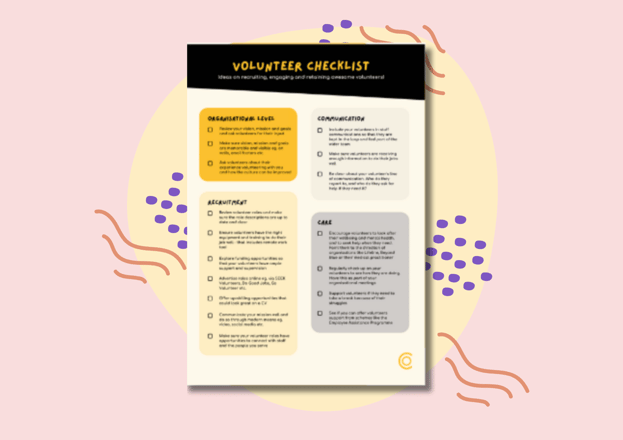
Download the free Volunteer Checklist
How do you recruit volunteers for a community organisation?
Start with your organisation's own strengths: your mission, your current volunteers, and people's need for connection. From there, keep role descriptions clear and current, and advertise online through platforms like SEEK Volunteer, Do Good Jobs and Go Volunteer, especially to reach younger volunteers.
How do you write a good volunteer role description?
A good role description outlines the skills expected, what the volunteer will actually do day to day, and how much decision-making authority they carry in the organisation. Keep it current and revisit it regularly as your organisation's needs shift.
How do you retain volunteers long-term?
Retention comes down to communication and wellbeing. Include volunteers in staff communications, be clear about who they report to and who to ask for help, and check in on how they're doing as part of your regular organisational meetings.
How do you keep volunteers engaged when they can't be on-site?
Offer remote-friendly roles such as social media, newsletters or admin support, hold virtual meetings, and make sure remote volunteers still have a clear line of communication and support. Staying socially connected, even informally, matters as much as the task itself.
Where can I advertise for new volunteers in Australia or New Zealand?
In Australia, SEEK Volunteer and Do Good Jobs are well-used platforms. In New Zealand, Volunteering New Zealand is a strong starting point.

Both also offer broader resources on recruiting and managing volunteers.
Recruiting and retaining volunteers isn't a one-off task, it's an ongoing relationship that depends on clarity, communication and genuine care. Lean into your organisation's mission, keep role descriptions current, and check in regularly on how your volunteers are actually doing. Build in a plan for disruptions before you need one, and you'll have a volunteer program that holds up under pressure rather than falling apart at the first sign of one.
.svg)
Book a personalised demo with a local team member




© 2026 SpacetoCo PTY LTD | All Rights Reserved | hello@spacetoco.com | AU: (08) 6102 1191 | UK: 0330 818 2437 | NZ: (09) 887 4698
©️ 2025 SpacetoCo PTY LTD | All Rights Reserved |
AU: (08) 6102 1191 | NZ: (09) 887 4698