
12 lessons from 12 months in the UK
One year of SpacetoCo, live and growing with UK hosts and hirers 🇬🇧 Twelve months ago, we launched in the UK not knowing exactly how the market .
.svg)
In short: Human connection shapes far more of daily life than most people notice, from a stranger not saying hello on the street to how a new employee reads a workplace on day one. At SpacetoCo, we see this play out constantly in the community spaces we work with: getting the physical space right is one of the most direct ways to enable that connection.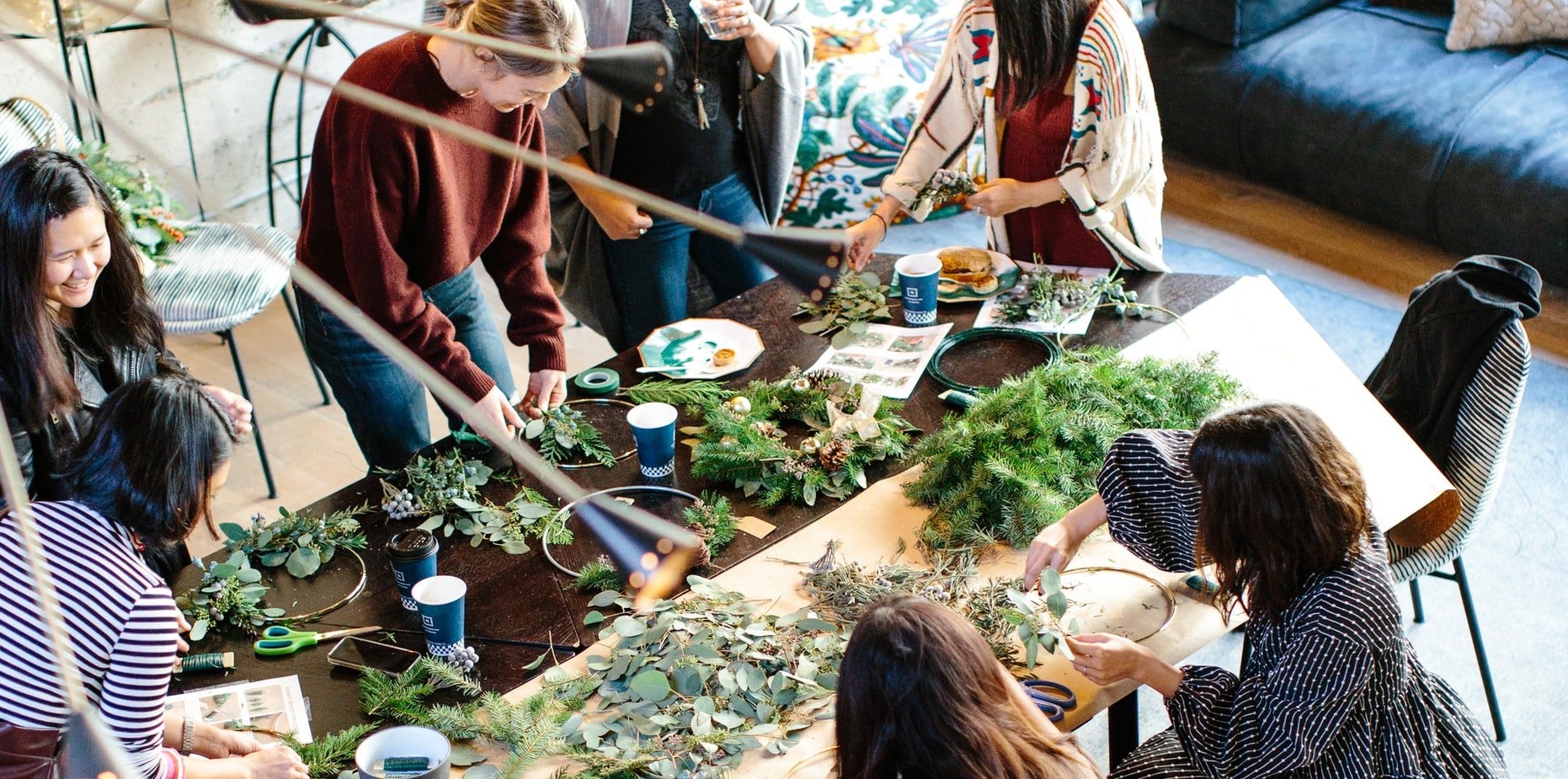 Someone doesn't say hi back to you on the street when you pass them? We don't like that, because we like to connect. That person is now marked in your memory.
Boss gives you feedback on a project? We might not like the content, but contact is what we crave. We are complex creatures.
Customer complaints? Human connection. Buy something at the supermarket through a human cashier? Human connection affects us all the time – you get the point…
Any and all connection helps us grow as humans and it's important to not lose sight of that. Our desire to connect also drives a lot of our decisions; and we often don't realise it.
If we go for an interview at an office and the receptionist is a bit distant that forms our view of the workplace immediately. Is everyone like this? Is this a good working environment? This is your need for connection taking over in a situation you might not expect. Even before you get to the important part, you're already worried about how you will personally connect with potential co-workers.
The why of why we need to connect has stayed pretty constant throughout human history – it's how we learn, form bonds and survive. But the way we achieve that has changed.
Nearly 70% of the world's population — 5.79 billion people — now uses social media, spending an average of 2 hours 21 minutes on it daily. Meanwhile, face-to-face contact keeps shrinking: US federal time-use data shows teens and young adults' daily socialising time has fallen from an hour to just 35 minutes as of 2025.
We've opened a lot of new doors – but, despite how much it's dominated our preferred methods of connection, the experience isn't a replacement for face to face interaction… just yet.
The internet is a lot different than it was when it first came on the scene – the transition from web 1.0 to web 2.0 shed most of the technological know-how required to surf the web. We can now use the internet for a whole host of activities, but some areas have lagged behind on fully utilising this new pathway. For example, how many unintuitive booking systems have you used in your lifetime? It's a big issue for companies in the digital era.
For online to become an actual platform for human connection – it should all be connected to the human. As the famous design principle goes: "Design is not what it looks like and feels like. Design is how it works." ("The Guts of a New Machine" by Rob Walker, New York Times Magazine, November 30, 2003.)
Businesses looking to make connections with customers should consider that customers are often faster to adopt new technology than businesses are to offer it. Simply put; the research tells us people prefer brands who connect with them like humans. The internet may be built on data; but that data should have a friendly face 😀
In short: When communities rally around a shared cause or space, the impact compounds well beyond the original goal, turning a single event or campaign into an ongoing source of connection and support.CEO Scott Harrison founded Charity: Water after leaving a career as a nightclub promoter to pursue charitable work abroad, most notably two years spent on a hospital ship where he saw firsthand the effects of unclean drinking water.
At every touchpoint with prospective and existing donors, Charity: Water puts the people it helps front and centre through videos and images showing the impact of the charity's work.
As Margaret Mead put it: "Never doubt that a small group of thoughtful, committed citizens can change the world; indeed, it's the only thing that ever has."
Learn how to recruit, engage and retain committee members and volunteers. 👉 Get the guide here.
There are some general boxes to be ticked when building a community, the order is negotiable for some, but generally you want to meet all these steps in some way:
Communities are a profound thing – take your time to get it right. Like most things, it stands the test of time better when built with care.
Once you build community, find volunteers! (Read our blog and get the full guide on how to recruit and care for our volunteers here.)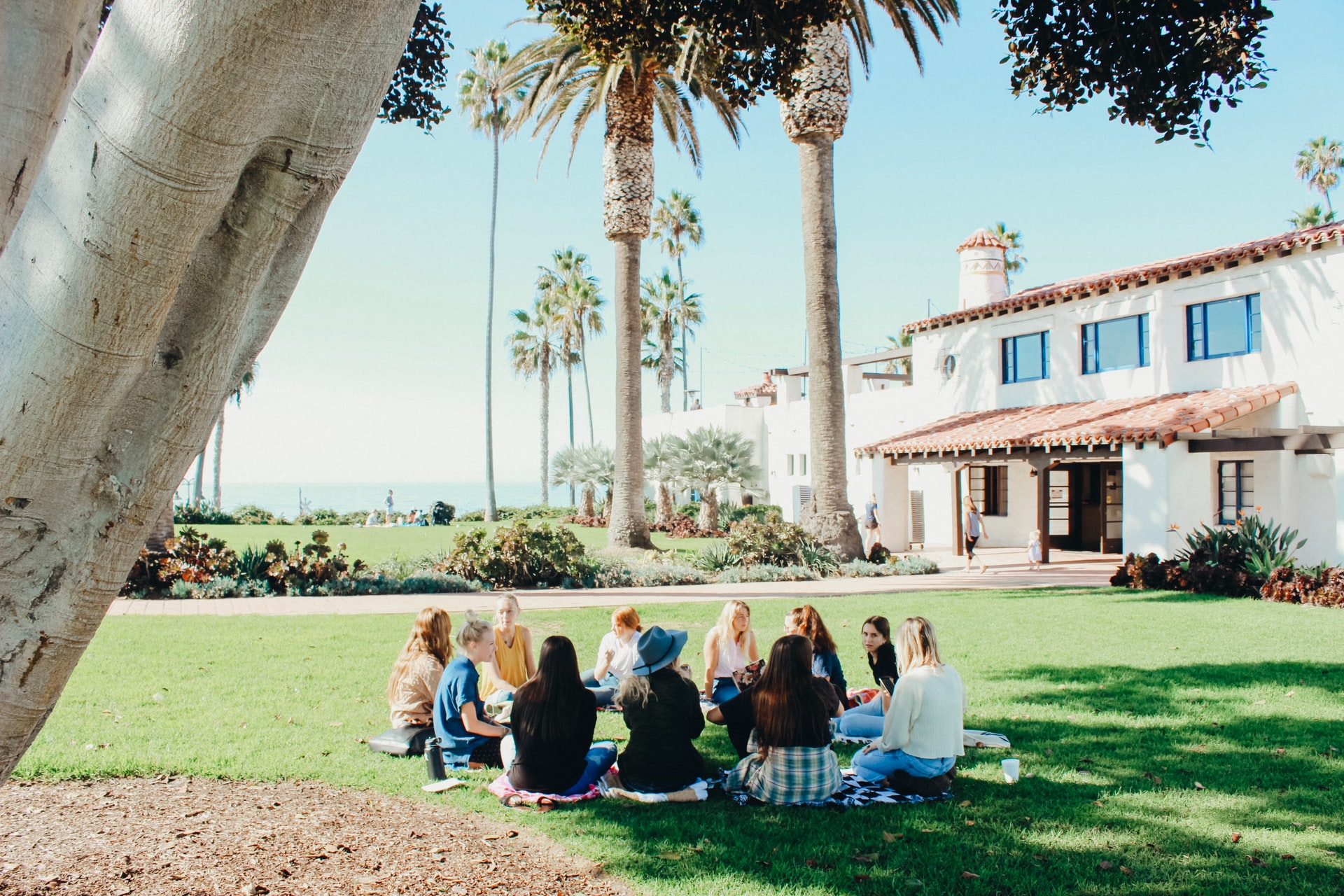 (Credit: @KylieLugo // Unsplash.com)
In short: Different community activities need different kinds of space, and matching the right space to the right activity has a direct effect on whether real connection actually happens.
Space sharing is a key component of community connection. When people are face-to-face with each other, real bonds form. But space comes in a lot of different forms, so how do individual spaces work towards fostering community connection?
Everything has a home, a place where it isn't necessarily present all the time, but where it usually belongs. Community groups are no exception. Getting the right space for the right group can have a profound impact on forming community connections; birthdays, church services, wedding anniversaries, the list of reasons people look for space is endless. (For more on this, see our full guide to space sharing.)
Here are some space types and what they're typically used for, though creative mismatches, like weddings in industrial warehouses or gigs in cafes, happen all the time:
|
Type |
Activity |
Suitable spaces |
|---|---|---|
|
Creative & Performance |
Making, performances and shows, dancing, exhibiting, filming, photoshoots, rehearsals, sculpting |
Galleries, maker spaces, theatres, green screens, cyclorama walls, sound recording studios, artist studios, dance studios with sprung flooring |
|
Leisure |
Exercise, training, fitness, basketball, tennis, football, soccer, netball |
Outdoor and indoor recreation spaces including studios, courts, playing fields, recreation centres |
|
Social |
Celebrations, social events, functions, baby showers, birthdays, parties, weddings |
Outdoor and indoor recreation spaces, recreation centres, town halls, community centres, parks, reserves, event spaces |
|
Gathering |
Concerts, church events, community rallies, community meet-ups, hackathons, performances |
Town halls, community centres, open and flexible spaces |
|
Meeting |
Private spaces for consulting and connecting, counselling, board meetings or any other 2-4 person meet-up |
Board rooms, office spaces, counselling rooms, consult rooms, small meeting rooms |
|
Wellness |
Rooms associated with wellbeing and health, meditation, wellness, yoga |
Studios, gyms, quiet classrooms, gardens, parks, halls, activity rooms, community centres |
|
Learning |
Workshops, professional development, training, cooking classes, classrooms, kitchens, lectures |
Libraries, vocational facilities, classrooms, lecture theatres, hot desks |
|
Outdoor |
Open spaces, gardens, nature, outdoor events, animal-friendly spaces |
Parks, reserves, gardens, acreage, streams, rivers, beach frontage |
|
Work |
Desks and productivity spaces, coworking, hot desks, pop-up, retail |
Offices, shop-fronts, professional spaces, board rooms |
A lot of the services we've come to take for granted are the result of community action. In some instances of American history, community organising created some of the first professional fire-fighting services, evolving from an era where firefighting was effectively a paid negotiation rather than a public service. Similar community-led efforts, like early neighbourhood watch groups, laid groundwork for modern policing.
None of this would have been possible without one of the oldest tools of community organisation: the town hall. Citizens throughout history have used these spaces to gather, meet and effect some of the most significant changes in society, tracing back to Roman forums and Greek agoras. From routine meetings on road maintenance to genuinely historic meetings of the minds, town halls and other civic community spaces have shaped our history.
The definition of a "town hall" has loosened over time. Any community meeting place can now be described that way, and in the US, some political campaign events are even called town halls. These spaces can be public or privately owned; churches, for instance, were important civic spaces before the separation of church and state, and restaurants across the American South were important meeting places for Civil Rights leaders during the Civil Rights Movement.
Civic community spaces matter because somewhere for people to openly meet and discuss important issues can be a catalyst for community action. Some might argue the internet has taken on a lot of these responsibilities, and it's true that plenty of movements have started online, but it's worth remembering where these ideas first took shape.
Local governments are often viewed as just another layer of bureaucracy, but a great deal of genuine community development happens through them. Understanding local government is, in effect, a prerequisite to understanding community development in your area.
There are a few key areas local governments can act on to build closer bonds within their community:
If you want to see this in action, find your local government's website (or search "[your suburb/town] council community programs") and see what's on offer. A long list of programs is a point of pride. A short one might be your cue to ask for more or organise something yourself. Local governments run on communities, and communities run on people power.
Want to know more about SpacetoCo and how it helps communities?
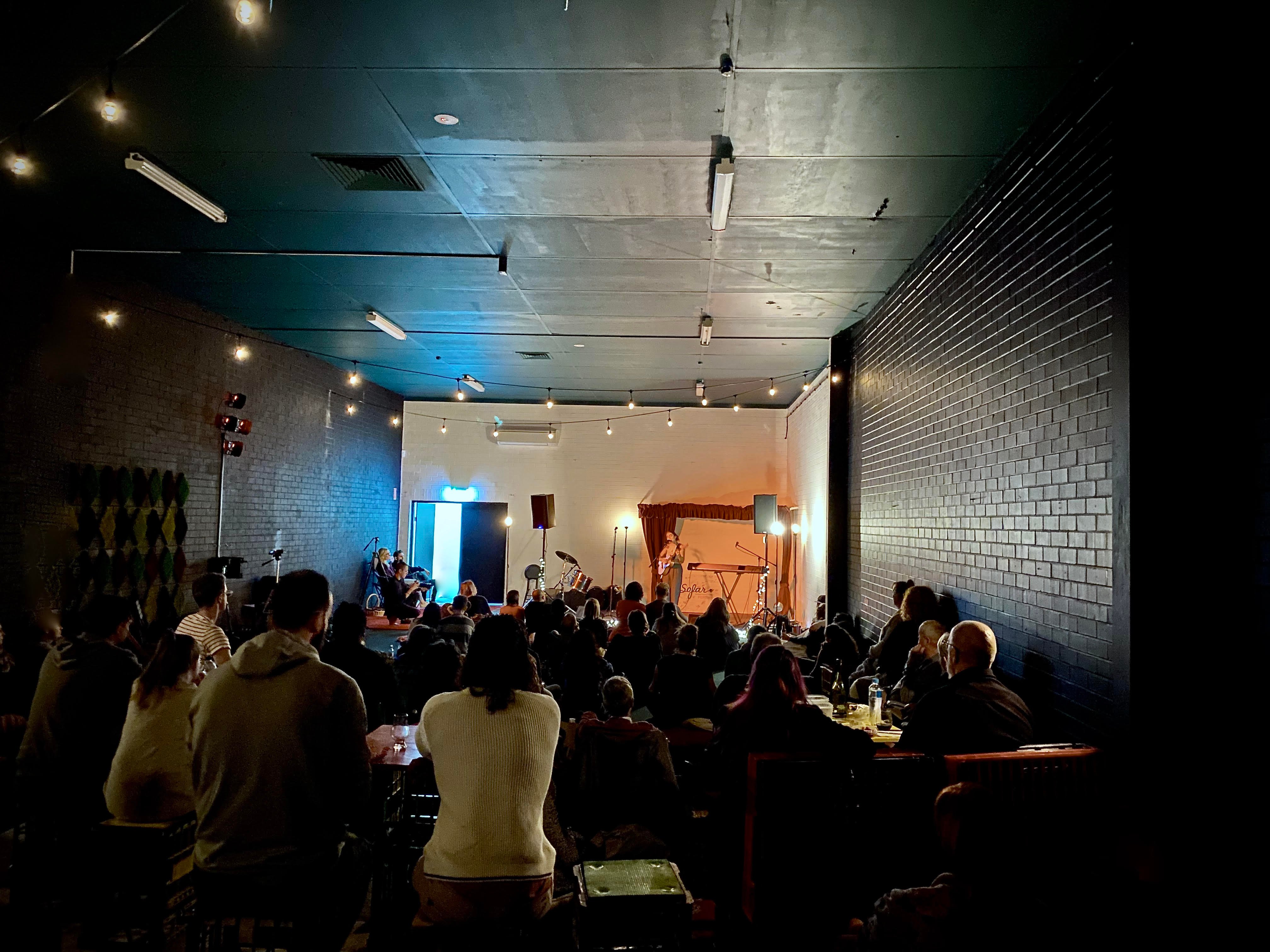 Since starting SpacetoCo in 2015, we've seen our fair share of community events, and one of the standout partnerships has been with Sofar Sounds, a global live show production company dedicated to small, intimate music gigs. Since 2009, they've put on unforgettable performances in cities including Atlanta, Boston, Chicago, Denver, Edinburgh, London, Los Angeles, New York City and San Diego.
Small, quirky gigs like this serve two functions: showcasing up-and-coming artists, and being one of the only music gig formats flexible enough to fit almost any space, from warehouses to cafes, without producing enough noise or foot traffic to upset the neighbours. One of these hidden gigs took place in a City of Vincent warehouse space, part of a wider partnership between SpacetoCo and the City that's grown to cover more than 70 bookable spaces. See the full City of Vincent case study for how that relationship developed.
Want more event ideas and other activations for your community venue? Get the full guide here!
Why is human connection important in community spaces? Human connection shapes decisions and experiences far more than people usually notice, from how a workplace feels on first impression to whether a customer trusts a brand. Community spaces matter because they create the physical setting for that face-to-face connection to happen, which online communication has not fully replaced.
How do you build a community from scratch? Five general steps apply: reach out to people who share an interest or location, set clear expectations for members, lead by example to form a culture, find a safe and accessible space to gather in, and give the community something that makes it stand out. The order can shift, but each element tends to matter.
How does space sharing help build community connection? Matching the right kind of space to the right activity, such as a meeting room for a small consultation or a hall for a community gathering, has a direct effect on whether genuine connection happens. Space sharing makes a wider range of these spaces accessible without requiring a community to own a building outright.
What role do local governments play in community development? Local governments typically build community connection through four levers: placemaking (redesigning public spaces around people), social programs, sharing spaces like libraries and halls for community use, and supporting existing community-led projects. Checking a local council's website for current programs is a practical way to see this in action.
.svg)
Book a personalised demo with a local team member




© 2026 SpacetoCo PTY LTD | All Rights Reserved | hello@spacetoco.com | AU: (08) 6102 1191 | UK: 0330 818 2437 | NZ: (09) 887 4698
©️ 2025 SpacetoCo PTY LTD | All Rights Reserved |
AU: (08) 6102 1191 | NZ: (09) 887 4698